
Ecommerce Growth Services That Turn More Shopping Opportunities Into Sales
Ecommerce Growth Services That Turn More Shopping Opportunities Into Sales
More traffic isn't the whole answer. Build an online store that helps the right customers discover products, make confident decisions, and complete their purchases.
Your ecommerce website may attract thousands of visitors while leaving valuable sales opportunities unrealized.
Products might be difficult to discover in search results. Category navigation may make it harder for shoppers to find what they need. Product pages might leave important questions unanswered, or friction during checkout may prevent customers from completing their orders.
These challenges can't always be solved by increasing advertising budgets or publishing more content.
At Karnaweb, we approach ecommerce growth as an ongoing process that connects ecommerce SEO, website development, shopping experience optimization, conversion performance, and analytics.
We examine the customer journey from product discovery to purchase, identify the obstacles limiting performance, and prioritize improvements based on business relevance and available evidence.
CTA: Explore Your Ecommerce Growth Opportunities
Why Your Online Store Needs a Connected Growth Strategy
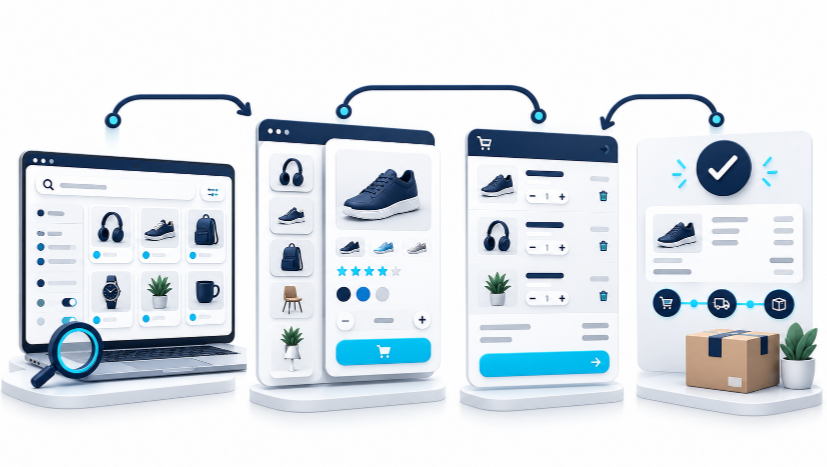
Ecommerce performance depends on multiple stages of the shopping journey.
Customers need to discover relevant products, understand their options, trust the store, and complete a purchase with as little unnecessary friction as possible.
A weakness at any stage can limit results.
For example:
A store with limited organic visibility may have problems with category architecture, product discoverability, or search demand coverage.
A store attracting relevant visitors but generating few add-to-cart actions may need better product information, stronger product-market alignment, or usability improvements.
A store with frequent checkout abandonment may have issues involving payment options, shipping costs, form complexity, or technical errors.
A store that measures purchases but not the steps leading to them may struggle to identify where improvements are most valuable.
The right growth plan depends on the problem your business is actually facing.
Rather than assuming every store needs the same services, we investigate the relationship between customer acquisition, shopping behavior, and commercial outcomes.
Our Ecommerce Growth Services
1. Ecommerce Performance Audits and Growth Opportunity Analysis
The first step is to understand how your store performs today.
We examine its structure, acquisition channels, important product and category pages, shopping journeys, and available business data.
Our analysis aims to answer practical questions:
Which products and categories matter most to your business?
Where are qualified shoppers entering the website?
Which pages attract visitors but produce limited commercial results?
At what stages do customers leave the buying journey?
Are technical limitations or usability problems creating unnecessary friction?
Which improvements may create value without proportionally increasing acquisition costs?
The outcome is a prioritized view of potential growth opportunities, supported by the evidence available.
2. Ecommerce SEO and Product Search Visibility
Ecommerce SEO requires a different approach from optimizing a conventional service website.
Online stores often contain extensive product catalogs, category hierarchies, filter combinations, and dynamically generated URLs.
The way these elements are organized affects how customers and search engines discover relevant products.
Our work may cover:
Commercial keyword research and purchase-intent analysis
Product and category page optimization
Ecommerce information architecture
Technical SEO and indexability
Internal linking and product discoverability
Faceted navigation and URL management
Pagination and crawlable product navigation
Product structured data validation
Identification of commercially important search opportunities
The objective is not to maximize the number of indexed URLs.
It is to make relevant products and categories accessible, understandable, and useful to customers searching for them.
3. Product Page Optimization

Product pages are central to ecommerce decision-making.
Customers need to understand what a product offers, whether it fits their requirements, which options are available, and what purchasing it involves.
We evaluate product pages for clarity, completeness, usability, and their ability to support informed decisions.
Depending on the product category, improvements may include:
Clearer product information architecture
Better presentation of features and specifications
Product comparisons and buying guidance
More intuitive variant selection
Improved product imagery and media placement
Clear availability and purchasing information
Authentic reviews and relevant trust signals
Stronger mobile add-to-cart experiences
Different products require different information.
A highly technical product may need detailed specifications and compatibility information, while another product category may depend more heavily on imagery, sizing, or practical usage details.
Our recommendations reflect the actual buying decisions customers need to make.
4. Category Navigation, Filtering, and On-Site Search
When an online store offers a large selection of products, helping shoppers find the right item becomes a critical part of the experience.
Poor category organization, ineffective filters, and weak internal search can make suitable products difficult to discover.
We examine how users browse and narrow their options.
Potential areas for improvement include:
Category and subcategory structure
Product listing organization
Filtering and sorting experiences
On-site search usability
Product availability presentation
Navigation between related categories
Mobile browsing patterns
Changes are also evaluated for technical SEO implications.
A useful filter should help customers find products without creating unnecessary crawling, indexing, or duplicate URL problems.
5. Ecommerce Conversion Rate Optimization
Increasing qualified traffic is valuable, but it doesn't automatically produce more orders.
The shopping experience needs to help visitors move toward a purchase with confidence.
We investigate where friction occurs and whether improvements to content, interface design, or functionality may help.
Our optimization work may cover:
Product detail page layouts
Pricing and shipping information clarity
Add-to-cart interactions
Trust and reassurance elements
Cart usability
Mobile purchasing experiences
Checkout forms
Payment and delivery option presentation
Error handling and recovery
We avoid assuming that generic design changes will produce universal results.
An effective conversion improvement should address an identified problem and be evaluated using suitable evidence.
6. Checkout and Cart Abandonment Optimization
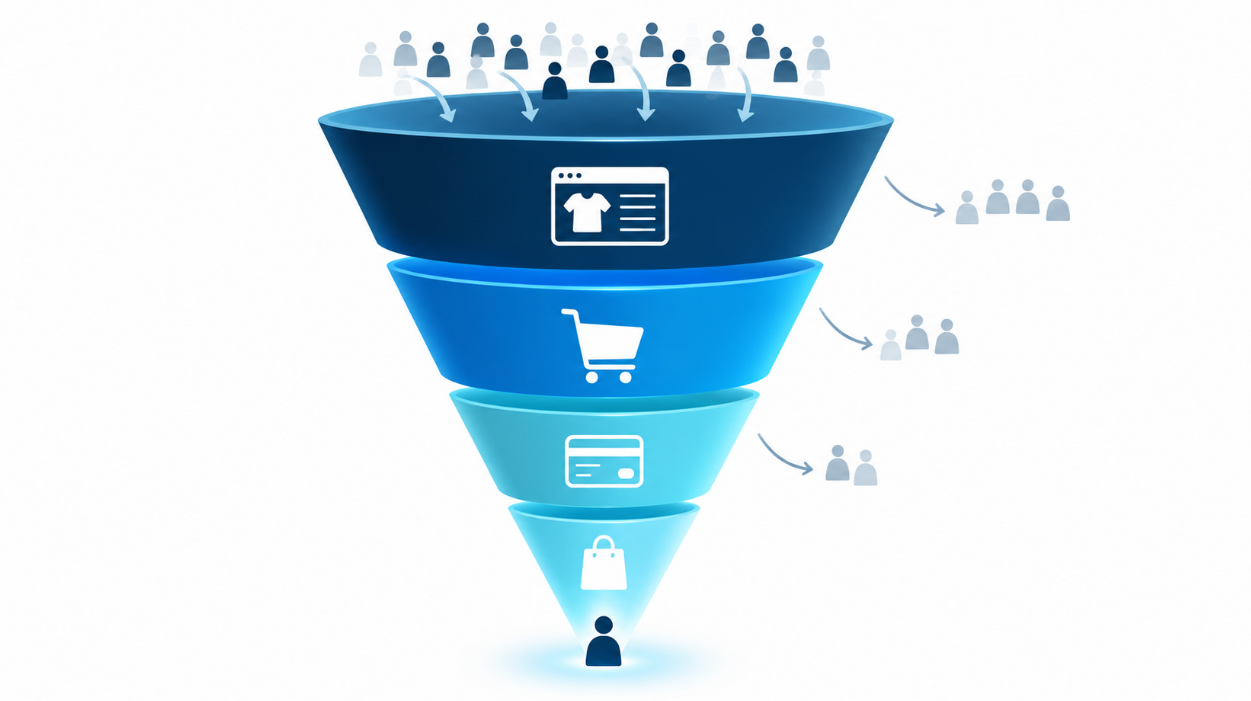
Not every abandoned cart represents a lost customer caused by poor website design.
Some shoppers are comparing prices, researching options, or simply not ready to purchase.
However, preventable obstacles can also contribute to abandonment.
We analyze the checkout process to investigate potential issues involving:
Unexpected costs
Confusing delivery information
Account creation requirements
Unnecessary form fields
Limited payment methods
Errors and failed transactions
Mobile checkout difficulties
Poor progress and validation feedback
Where justified, we recommend improvements that simplify the experience while preserving necessary security, operational, and compliance requirements.
The objective is to reduce avoidable friction, not to remove essential safeguards.
7. Ecommerce Development and Technical Performance
Growth opportunities are sometimes limited by the technology behind the store.
Slow pages, unreliable filters, product data issues, unstable checkout behavior, or restrictive templates can affect both customers and business operations.
Our background in web design and development allows us to investigate technical limitations alongside their commercial consequences.
Depending on the website, improvements may include:
Storefront performance optimization
Template and component improvements
Mobile interface development
Custom ecommerce functionality
Technical fixes affecting product discovery
Improvements to product and category templates
Integration-related troubleshooting
Ongoing platform development
A complete rebuild is not always necessary.
We assess whether targeted changes can address the problem before recommending a larger redevelopment project.
8. Ecommerce Analytics and Purchase Funnel Measurement
Reliable measurement helps distinguish assumptions from evidence.
A store may know how many orders it received while having limited visibility into the steps customers took before purchasing.
We review ecommerce tracking and the quality of available data to help create a clearer picture of shopping behavior.
With Google Analytics 4, relevant events may include:
view_item: A customer views a product.
add_to_cart: A customer adds an item to their cart.
begin_checkout: A customer begins checkout.
purchase: A transaction is completed.
refund: A refund is recorded.
These events need to be implemented and validated correctly.
Product identifiers, order values, currencies, transaction IDs, and other parameters should be consistent with the store's actual transactions.
Where possible, analytics data should be reconciled against the ecommerce platform's order records.
This helps businesses make decisions based on data they can reasonably trust.
9. Ecommerce Content and Product Discovery Strategy
Useful content can help customers find, compare, and select products.
Depending on the business, this may involve buying guides, product comparisons, category explanations, technical advice, and answers to common purchasing questions.
We evaluate content opportunities according to actual search needs, commercial relevance, and their role in customer decision-making.
Rather than producing large volumes of generic articles, we focus on content that serves a useful purpose.
We also consider how relevant articles, category pages, and product pages should connect through internal linking.
10. Continuous Ecommerce Improvement
An ecommerce growth strategy should evolve as the store changes.
New products enter the catalog. Customer preferences shift. Technical limitations emerge. Competitors adapt.
Performance data may reveal opportunities to improve important categories, revise product pages, or refine the checkout experience.
We use ongoing analysis to identify where further work may be justified.
At Karnaweb, launching or redesigning an online store is not the end of the process.
It is the foundation for continuous improvement.
Why Karnaweb Takes an Integrated Approach to Ecommerce Growth
Ecommerce is a connected system.
SEO can attract more potential customers, but its commercial impact may be limited if product information is unclear or checkout is difficult.
Conversion improvements may help existing visitors purchase more effectively, but their impact can also be constrained when a store attracts little relevant traffic.
And without reliable measurement, it becomes difficult to understand which changes are working.
Our approach brings these disciplines together around your business needs.
Business Outcomes Come First
We begin by identifying which performance problems deserve attention.
The goal is to understand what limits growth before selecting the services required to address it.
SEO, Development, and UX Work Together
We consider how acquisition, store architecture, product information, usability, and technical implementation affect one another.
Priorities Are Based on Evidence
We evaluate potential improvements according to commercial relevance, available data, implementation effort, and associated risks.
Growth Is an Ongoing Partnership
We see optimization as a cycle of analysis, implementation, measurement, and refinement.
The objective is to help your ecommerce platform remain useful and adaptable as business requirements evolve.
Our Ecommerce Growth Process
Step 1: Understand Your Business
We learn about your products, target customers, revenue model, operational requirements, and growth objectives.
This establishes the commercial context for the work.
Step 2: Assess Your Store's Performance
We evaluate organic visibility, store architecture, product experiences, conversion paths, technical limitations, and data quality.
The assessment focuses on identifying meaningful opportunities rather than generating a generic list of issues.
Step 3: Develop a Prioritized Roadmap
We organize potential improvements based on expected relevance, supporting evidence, implementation effort, and dependencies.
The roadmap defines what to address first and how progress should be assessed.
Step 4: Implement and Optimize
We work on agreed priorities, which may involve SEO, product content, UX improvements, technical development, or analytics implementation.
Where appropriate, we collaborate with your existing development and marketing teams.
Step 5: Measure and Refine
We examine the results of completed work, assess what the evidence shows, and adjust priorities as new opportunities emerge.
Our goal is to create a repeatable improvement process rather than a collection of disconnected projects.
How We Measure Ecommerce Growth
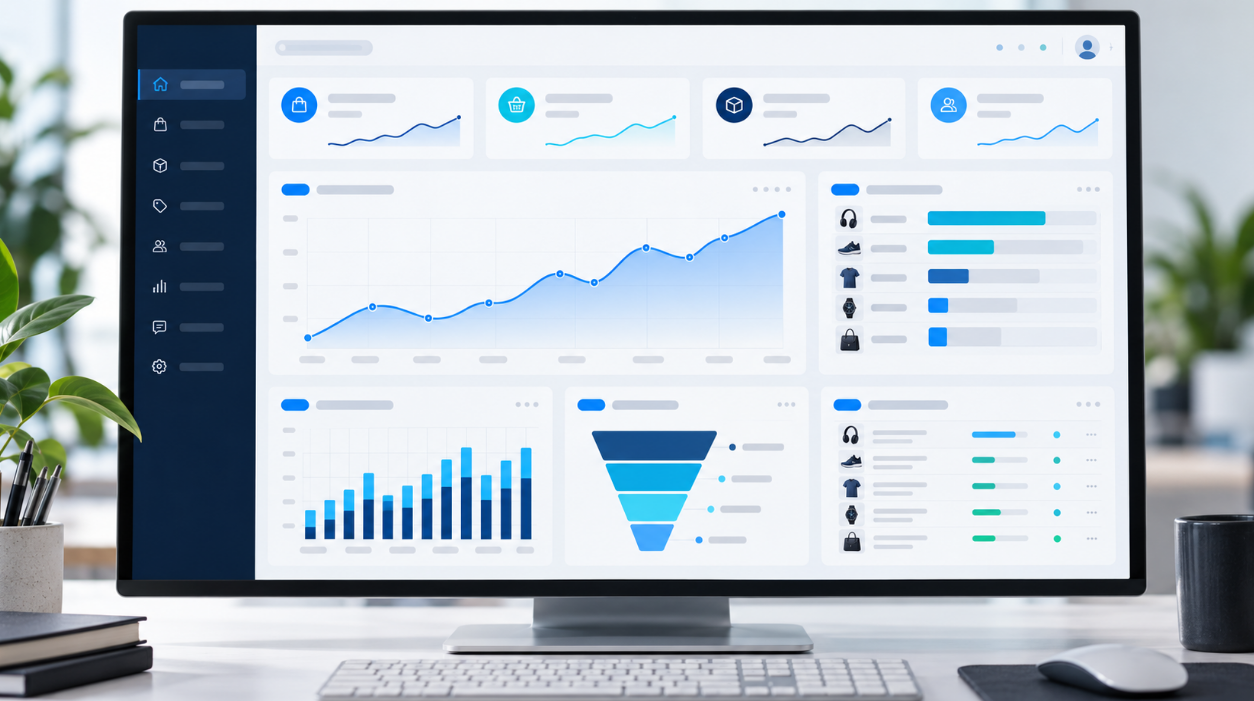
Revenue is important, but it doesn't tell the entire story.
The right measurement framework should also consider purchasing behavior, acquisition quality, and business economics.
| Metric | What It Helps Evaluate |
|---|---|
| Ecommerce Revenue | Recorded sales value |
| Purchase Conversion Rate | The relationship between purchases and a clearly defined traffic or user denominator |
| Average Order Value (AOV) | Average monetary value of completed orders |
| Add-to-Cart Rate | How visitors engage with product offers |
| Checkout Completion | The effectiveness of the final purchasing stages |
| Organic Product Visibility | Search performance of important products and categories |
| Revenue by Channel | Channel contribution within attribution limitations |
| Profitability | Commercial value after relevant costs, where reliable data is available |
For example, higher revenue accompanied by substantially lower margins may not represent healthier business performance.
Metrics should be selected and interpreted in the context of your store's actual business model.
Who Are Our Ecommerce Growth Services For?
Our approach is relevant to online stores that:
Receive traffic but struggle to generate sufficient sales.
Have large or complex product catalogs.
Need to improve organic product discovery.
Experience usability problems in product selection or checkout.
Are expanding into new categories or markets.
Have technical limitations affecting shopping performance.
Want a long-term partner for ecommerce optimization.
For newer stores with limited traffic or insufficient tracking, the first priority may be improving measurement and resolving foundational issues before larger optimization programs.
Frequently Asked Questions
What is the difference between ecommerce growth and ecommerce website development?
Ecommerce development focuses on creating or improving the technical platform and shopping functionality.
Ecommerce growth considers the wider commercial journey, including product discovery, acquisition, conversion, measurement, and ongoing optimization.
Development can be an important part of that strategy, but it is not the entire strategy.
Do I need to redesign my store to increase sales?
Not necessarily.
Many improvements can be made within an existing ecommerce platform through changes to product pages, navigation, performance, tracking, or checkout.
We recommend larger redevelopment projects only when there is a clear business and technical case.
Will increasing website traffic automatically increase sales?
No.
Sales depend on the relevance of incoming visitors, product-market fit, prices, availability, trust, usability, and other factors.
More traffic can create opportunities, but it does not guarantee more purchases.
Do your ecommerce growth services include SEO?
Yes. Ecommerce SEO is one of the key components of the proposed service offering.
The scope of SEO work depends on the store's requirements and the priorities identified during assessment.
Can you work with WooCommerce and custom ecommerce platforms?
Our service scope can include WooCommerce websites and custom-built ecommerce platforms.
The feasibility of individual changes depends on the technology, access permissions, integrations, and project requirements.
Can conversion improvements increase sales without a larger advertising budget?
In some cases, improving the experience for existing visitors can create opportunities for additional sales without proportionally increasing acquisition spend.
The potential impact depends on the store's traffic quality, existing conversion barriers, products, and commercial conditions.
How long does ecommerce optimization take to show results?
There is no single timeline.
Some focused checkout or usability changes can be evaluated relatively quickly when traffic and data are sufficient.
Organic search improvements and more extensive development projects generally require a longer evaluation period.
Do you offer ongoing ecommerce optimization?
Our proposed engagement model supports continuing analysis, implementation, and improvement.
The specific responsibilities, reporting arrangements, and development resources are defined in the agreed scope.
How much do ecommerce growth services cost?
Pricing depends on store size, product catalog complexity, platform limitations, commercial objectives, and the amount of implementation required.
An initial assessment helps determine which services are relevant and how the work should be structured.
Discover What's Holding Back Your Ecommerce Growth
Your next growth opportunity may come from stronger product visibility, better category navigation, clearer product information, a smoother checkout, or a technical improvement.
The important question is which change matters most to your business.
At Karnaweb, we connect ecommerce SEO, web development, shopping experience optimization, and analytics to help online businesses identify opportunities and pursue measurable improvements.
Final CTA: Let's Discuss Your Ecommerce Growth Opportunities