
Conversion Rate Optimization Services That Turn More Visitors Into Customers
Conversion Rate Optimization Services That Turn More Visitors Into Customers
You don't always need more traffic to create more business opportunities. Sometimes the most valuable improvements happen after visitors arrive.
Your website may attract a steady flow of potential customers while producing fewer enquiries, bookings, or purchases than expected.
Some visitors struggle to find the information they need. Others encounter confusing forms, unclear offers, or unnecessary steps before completing an action.
But why does this happen?
Is the value proposition unclear? Does the website create friction? Are customers missing information they need to make a decision? Or is the incoming traffic poorly matched to the offer?
At Karnaweb, we approach conversion rate optimization (CRO) as a research-driven process that connects user behavior, website experience, performance measurement, and practical improvements.
We investigate what may prevent relevant visitors from taking meaningful action, prioritize opportunities, and evaluate changes using methods appropriate to the available evidence.
Our focus is not simply on increasing conversion percentages. It is on improving the customer journey in ways that support real business objectives.
CTA: Explore Your Website's Conversion Opportunities
What Is Conversion Rate Optimization?

Conversion rate optimization is the process of improving a website or digital experience to help more eligible visitors complete meaningful actions.
The definition of a conversion depends on your business model.
For an ecommerce store, the primary conversion may be a completed purchase.
For a B2B service provider, it may be a qualified consultation request or a meeting with the sales team.
For a local service business, it could be a booking or enquiry.
The basic conversion rate calculation compares the number of conversions with a defined population, such as sessions or users.
For example, if a website records 20 converting sessions out of 1,000 sessions, its session-based conversion rate is 2%.
A user-based rate may be different, which is why consistent definitions matter.
Effective CRO does not mean persuading every visitor to convert at any cost.
It means identifying unnecessary obstacles, making information easier to understand, and helping the right visitors take the next step.
Why a Higher Conversion Rate Doesn't Always Mean Better Business Performance
Conversion metrics need context.
A shorter lead generation form may generate more submissions but also attract a higher proportion of irrelevant enquiries.
An ecommerce promotion may increase purchases while reducing profit margins.
A landing page may create more button clicks without increasing completed applications or qualified leads.
That's why we examine conversion quality and relevant commercial outcomes alongside headline conversion rates.
The objective is better business performance, not simply better-looking dashboard numbers.
Why Aren't Visitors Converting?
Conversion challenges rarely have one universal cause.
Different websites and audiences experience different obstacles.
Unclear Messaging and Value Proposition
Visitors may struggle to understand what the business offers, who the service is for, or why it is relevant to their needs.
Confusing Information Architecture
Important content may be buried under complex navigation, poorly organized sections, or difficult-to-follow page structures.
Missing Decision-Making Information
Users may need more details about services, product specifications, pricing approaches, delivery, project processes, or relevant qualifications before proceeding.
Poor Mobile Usability
Small touch targets, difficult forms, unstable layouts, and performance issues can create unnecessary friction for mobile visitors.
Complicated Forms and Purchase Flows
Excessive fields, confusing validation, unclear next steps, and technical failures can prevent people from completing an action.
Traffic and Offer Misalignment
Sometimes the main problem is not the website interface.
Visitors may arrive with informational intent when the page primarily targets immediate purchase decisions, or they may be looking for a service the business does not provide.
Understanding this distinction helps avoid unnecessary design changes.
Our Conversion Rate Optimization Services
1. CRO Audits and Conversion Opportunity Analysis
Effective optimization begins with understanding what the website is expected to achieve.
We review key pages, conversion goals, user journeys, available analytics, and potential points of friction.
Rather than producing a generic list of interface recommendations, we investigate how the experience relates to actual visitor needs and business objectives.
Our assessment considers questions such as:
Which actions matter most to the business?
Which pages play an important role in conversion?
Where do visitors encounter difficulties?
Are potential customers receiving the information they need?
How reliable is the existing conversion data?
Which changes deserve further investigation?
The expected output is a prioritized set of opportunities, supported by observations and testable hypotheses where appropriate.
2. Conversion Funnel Analysis
A conversion funnel represents the steps visitors take toward a defined outcome.
For a service website, the journey may involve visiting a service page, opening a contact form, starting an enquiry, and submitting it successfully.
For an ecommerce store, it may include viewing a product, adding it to the cart, beginning checkout, and completing a purchase.
We analyze relevant steps to identify where users leave the process and whether those patterns suggest an opportunity for improvement.
However, abandonment does not always mean something is broken.
Some visitors are researching, comparing options, or returning later.
We interpret funnel data alongside traffic quality, visitor intent, and the wider customer journey.
3. User Behavior Research and Experience Analysis
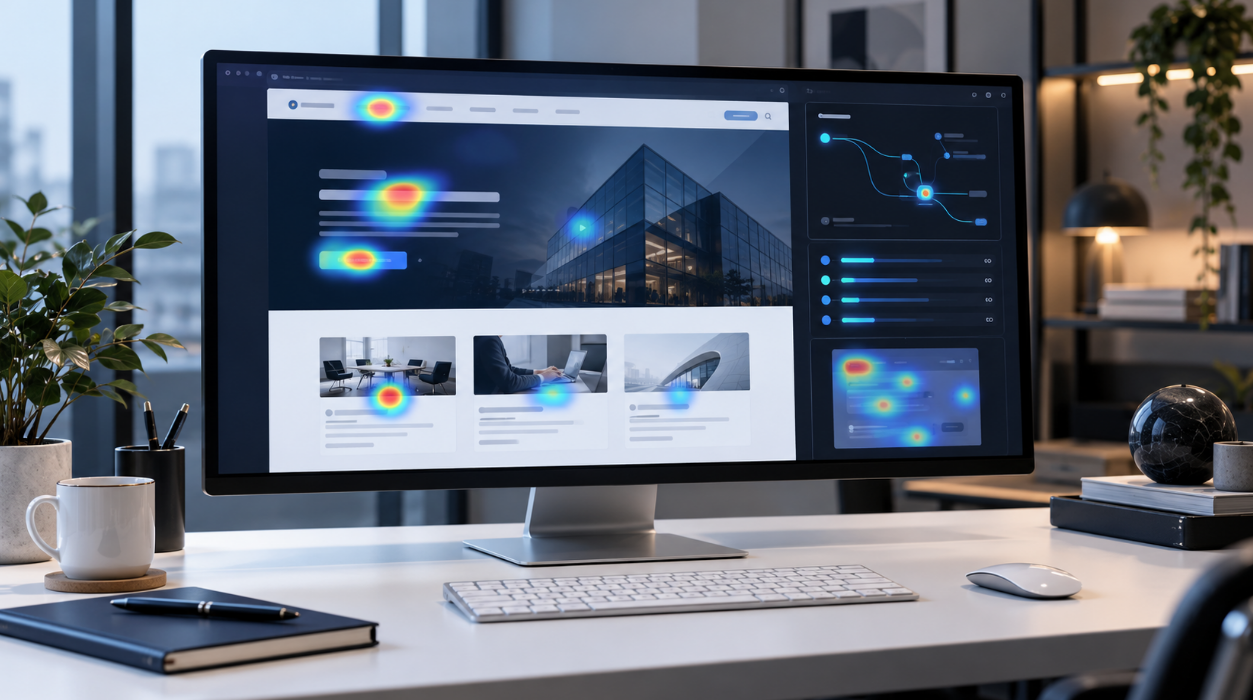
Quantitative analytics can reveal patterns, but numbers alone rarely explain why users behave the way they do.
Behavioral research can provide additional context.
Depending on the website, data availability, and privacy requirements, methods may include:
Click and scroll heatmaps
Privacy-protected session recordings
Navigation path analysis
Form interaction analysis
Usability testing
User interviews
Investigation of recurring interface errors
These methods help generate evidence-informed explanations of what users may be experiencing.
A heatmap, for example, can show where interactions occur. It does not independently prove that a particular design element causes low conversion rates.
We combine observations from different sources before recommending significant changes.
4. Landing Page and Service Page Optimization
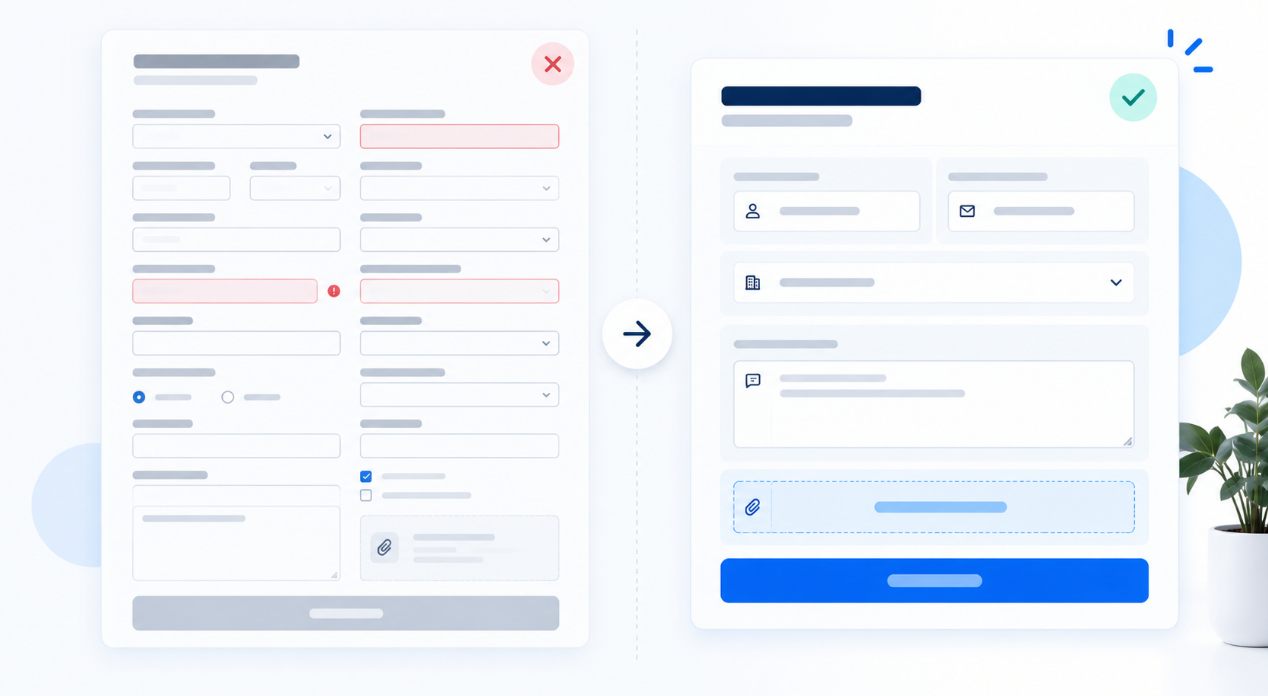
A landing page should help visitors understand whether an offer matches their needs and what to do next.
When the message does not align with the visitor's expectations, the page may struggle to convert even if it looks professional.
We review areas such as:
Headline clarity
Value proposition and offer relevance
Alignment with search or campaign intent
Content hierarchy
Service descriptions
Trust signals and supporting evidence
Calls to action
Form placement and interaction
The goal is not to fill every page with more persuasive elements.
It is to provide the right information in a useful sequence, reduce uncertainty, and create a clear path toward meaningful action.
5. Lead Generation Form Optimization
For many B2B and professional service websites, forms are a critical part of customer acquisition.
An unnecessarily complicated form may discourage relevant visitors.
However, removing essential questions can reduce lead quality and create additional work for sales teams.
We evaluate forms according to their purpose and the information actually needed at each stage.
Potential improvements include:
Simplifying field structure
Improving field order
Explaining why information is requested
Making validation errors understandable
Improving mobile input experiences
Providing clear submission feedback
Preventing accidental duplicate submissions
Tracking successful conversions accurately
For lead generation businesses, we also consider how submitted enquiries are evaluated after they reach the sales team.
More submissions are not always the same as more qualified opportunities.
6. Mobile Experience and Accessibility Improvements
Visitors interact with websites across different devices and environments.
A desktop experience that works well may become difficult to use on a smaller screen.
We investigate issues involving navigation, layout, interactive controls, forms, content order, and responsiveness.
Accessibility is also an important part of reducing avoidable barriers.
Depending on the scope, this may include reviewing contrast, focus visibility, keyboard access, form labels, error messages, and semantic structure.
The aim is to support clear, inclusive experiences that allow more people to use the website effectively.
7. Ecommerce Conversion and Checkout Optimization
For online stores, many conversion opportunities exist between product discovery and completed purchase.
Customers may struggle to compare product options, understand shipping conditions, select variants, or complete checkout on mobile devices.
We analyze these experiences and identify opportunities to reduce unnecessary friction.
Areas of focus may include product information, cart interactions, checkout structure, payment options, error handling, and customer reassurance.
This work overlaps with ecommerce growth, but the scope is distinct.
Our broader Ecommerce Growth service addresses acquisition, product discovery, store development, and commercial performance across the business.
CRO focuses specifically on understanding and improving the experience of converting visitors into meaningful actions.
8. A/B Testing and Experimentation
A/B testing compares alternative experiences under controlled conditions.
For example, a business might test whether a revised service page structure leads to more qualified enquiries than the current version.
But a successful experiment requires more than launching two designs and selecting the one with a higher conversion percentage.
Before running a test, we consider:
The research finding and hypothesis
The specific change being evaluated
The primary success metric
Appropriate secondary and guardrail metrics
Expected traffic and conversion volume
Statistical power and minimum detectable effect
Test duration and analysis approach
Implementation and tracking reliability
Insufficient sample sizes can produce misleading conclusions.
For low-traffic websites, a traditional controlled experiment may not be practical.
In those situations, qualitative research, direct usability improvements, and careful monitoring may offer a more appropriate path.
We don't present inconclusive experimental results as proven successes.
9. Lead Quality and Revenue-Focused Conversion Measurement
On lead generation websites, a form submission is often only the beginning of the commercial process.
Some enquiries become qualified opportunities. Others may not match the business's target audience.
A higher form submission rate can therefore be misleading if lead quality declines.
Where appropriate systems and reliable data are available, we investigate how digital interactions connect with later sales stages.
Relevant measures may include qualified leads, booked sales meetings, opportunities, and acquired customers.
This approach helps connect website optimization with outcomes that matter beyond the browser.
10. Continuous Conversion Improvement
Conversion optimization should evolve with customer behavior, business priorities, and website changes.
An improvement that works for one page or audience may not work for another.
New products, offers, traffic sources, and technical changes can introduce different conversion challenges.
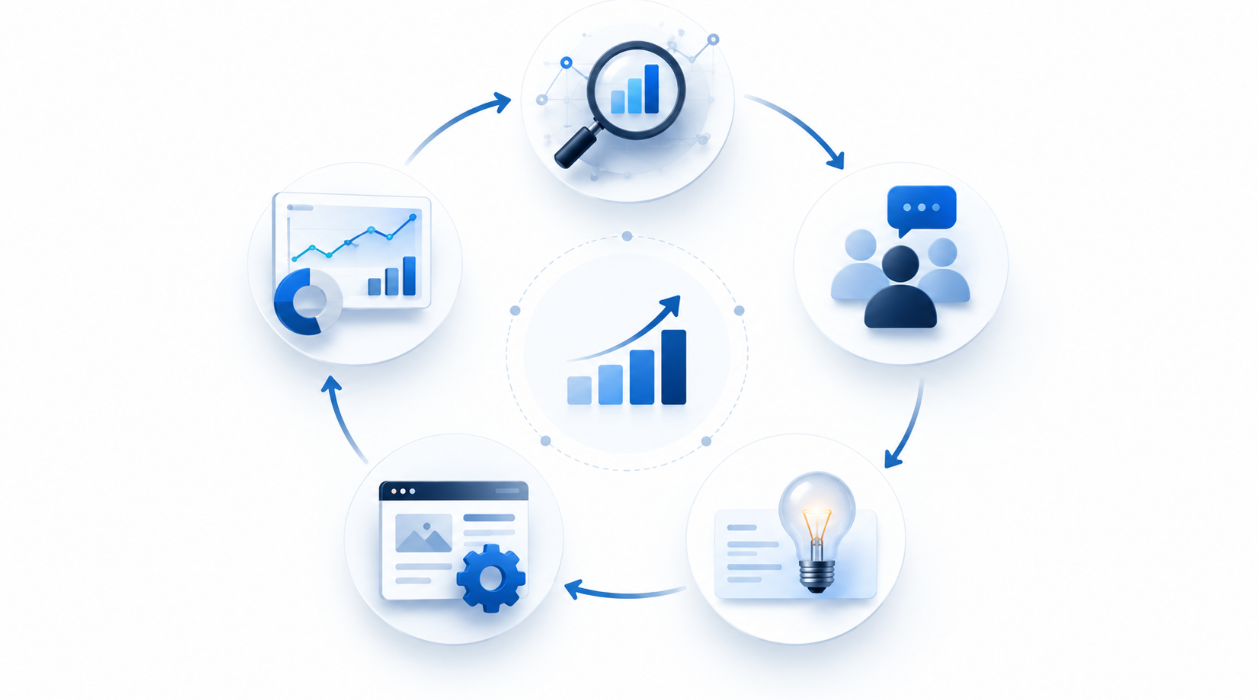
Our approach supports an ongoing cycle of research, prioritization, implementation, evaluation, and refinement.
Experiments may produce positive, negative, or inconclusive results.
Each outcome needs careful interpretation before deciding what to change next.
How CRO Differs Across Business Models
The most meaningful conversion depends on what the business offers and how customers make decisions.
| Business Type | Important Conversion | Common Challenge |
|---|---|---|
| Professional services | Qualified enquiry or appointment | Trust and clarity |
| B2B companies | Sales meeting or proposal request | Lead quality and complex offerings |
| Ecommerce | Completed purchase | Product selection and checkout friction |
| Education | Registration or information request | Program clarity and enrollment process |
| SaaS | Trial signup or demo request | Communicating value and helping users get started |
A useful CRO strategy starts by identifying which actions genuinely represent progress toward business goals.
Our Conversion Optimization Process
Step 1: Define Business Objectives and Conversions
We begin by understanding your commercial goals, target audiences, and the actions your website should encourage.
Conversion definitions and success indicators are established before drawing conclusions from the available data.
Step 2: Review Analytics and Measurement Quality
We evaluate the existing tracking setup, key events, important funnels, and relevant reporting.
If the data contains major gaps or inconsistencies, measurement improvements may need to come first.
Step 3: Research User Behavior and Identify Friction
We investigate quantitative patterns and, where appropriate, qualitative evidence.
The purpose is to distinguish suspected problems from findings that have adequate support.
Step 4: Prioritize Opportunities
Recommendations are assessed according to business relevance, strength of evidence, potential value, implementation cost, and risk.
This creates a practical roadmap rather than a long collection of unranked design ideas.
Step 5: Implement and Evaluate Changes
We work on the agreed improvements, coordinating design, development, and measurement requirements.
When experimentation is appropriate, controlled tests may be used to evaluate their impact.
Otherwise, changes are monitored using methods suitable for the website's data and operating conditions.
Step 6: Learn and Refine
We assess the results, document relevant findings, and use them to inform subsequent priorities.
The goal is a repeatable process for improving digital performance, not a one-time redesign exercise.
How We Measure CRO Success
There is no universal set of conversion metrics suitable for every website.
The measurement approach should reflect the business model and the actual value of visitor actions.
| Metric | What It Helps Evaluate |
|---|---|
| Primary Conversion Rate | The share of a defined user or session population completing the main action |
| Qualified Leads | Relevance and value of incoming enquiries |
| Form Completion Rate | Friction in important forms |
| Checkout Completion Rate | Effectiveness of purchasing stages |
| Revenue per Visitor | Commercial value generated from website traffic where data is reliable |
| Lead-to-Customer Rate | Relationship between website enquiries and acquired customers |
| Guardrail Metrics | Potential unintended effects on profitability, quality, or user experience |
An important distinction is that observing a conversion rate improvement after a design change does not, by itself, prove causation.
We interpret results according to the research and evaluation method used.
Who Benefits From CRO Services?
Our approach is particularly relevant to businesses that:
Attract relevant traffic but generate fewer enquiries or sales than expected.
Depend on their website for customer acquisition.
Invest in SEO or advertising but have limited insight into conversion performance.
Experience usability problems in important customer journeys.
Need to improve lead quality rather than submission volume alone.
Want to make design and development decisions based on evidence.
Are looking for an ongoing digital growth partner.
For websites with limited traffic or unreliable measurement, foundational tracking and usability work may be more useful than an extensive experimentation program.
What Effective CRO Should Not Be
Not every tactic that increases short-term clicks creates lasting business value.
Misleading urgency messages, hidden charges, confusing opt-out processes, and manipulative interface patterns can undermine customer trust.
Similarly, changing button colors without a meaningful hypothesis is not a substitute for understanding user behavior.
Good conversion optimization helps people make informed decisions with less unnecessary friction.
Sustainable improvements should support both business outcomes and the needs of customers.
Frequently Asked Questions
What is a good conversion rate for a website?
There is no universally correct conversion rate.
A useful benchmark depends on the business model, traffic source, audience, industry, conversion definition, and stage of the customer journey.
Comparisons are meaningful only when the underlying metrics and circumstances are reasonably comparable.
Can CRO improve results without increasing traffic?
Yes, in some situations.
Reducing conversion barriers can help a website generate more meaningful actions from existing traffic.
However, the scale and reliability of any improvement depend on the website, audience, and available evidence.
What is the difference between CRO and SEO?
SEO primarily focuses on improving organic search visibility and attracting relevant visitors.
CRO focuses on what happens after visitors arrive, including their experience, decisions, and conversion behavior.
The two disciplines complement each other.
Does CRO always require A/B testing?
No.
A/B testing is useful when the website has sufficient traffic, reliable measurement, and a properly designed experiment.
For low-volume websites, usability research and carefully monitored improvements may be more appropriate.
Is conversion optimization only for ecommerce websites?
No.
B2B companies, professional service firms, education providers, and software businesses can also improve conversions such as qualified enquiries, registrations, and demo requests.
Do we need to redesign our website to improve conversions?
Not necessarily.
Many conversion challenges can be addressed through targeted changes to content, forms, navigation, page layouts, or functionality.
A larger redesign should have a clear business and technical justification.
How long does CRO take to show results?
The timeline depends on the type of changes, traffic volume, conversion frequency, and evaluation method.
Some improvements can be implemented quickly, while gathering enough evidence to establish their impact may take considerably longer.
Can you guarantee a conversion rate increase?
No.
User behavior and business performance depend on multiple factors, and improvement cannot be guaranteed before investigation.
We focus on evidence-based recommendations, appropriate execution, and careful evaluation.
How much do conversion rate optimization services cost?
Costs depend on website complexity, data quality, research requirements, design and development needs, and whether controlled experimentation is feasible.
The scope can be defined after an initial assessment of the most relevant conversion opportunities.
Make More of the Traffic Your Website Already Attracts
Your website may already contain opportunities to improve customer acquisition.
Some may involve unclear information. Others may arise from complicated forms, difficult purchasing experiences, or technical problems that interrupt important user journeys.
Finding the right opportunities requires more than assumptions or cosmetic design changes.
At Karnaweb, we connect user behavior analysis, UX design, web development, and performance measurement to help businesses pursue meaningful, measurable conversion improvements.
Final CTA: Let's Find Your Next Conversion Opportunity