
Web Design & Development Built Around Your Business Goals
Web Design & Development Built Around Your Business Goals
Your website should do more than establish an online presence. It should help your business attract customers, communicate value, support conversions, and adapt as your needs evolve.
A successful website is not simply a collection of attractive pages. It is a business platform connecting your brand, customers, content, technology, and growth objectives.
A website may look impressive but still fail to explain what a company offers. It may be difficult to navigate on mobile devices, create unnecessary friction for potential customers, or require expensive redevelopment whenever the business needs something new.
At Karnaweb, we approach web design and development with a broader purpose.
We combine custom web development, user experience design, search engine optimization, and business thinking to create websites designed for real operational needs and long-term improvement.
Our goal is not merely to deliver a finished website. It is to build a digital foundation that can support your next stage of growth.
CTA: Let's Discuss Your Website Project
Great Websites Start With Business Strategy, Not Just Design
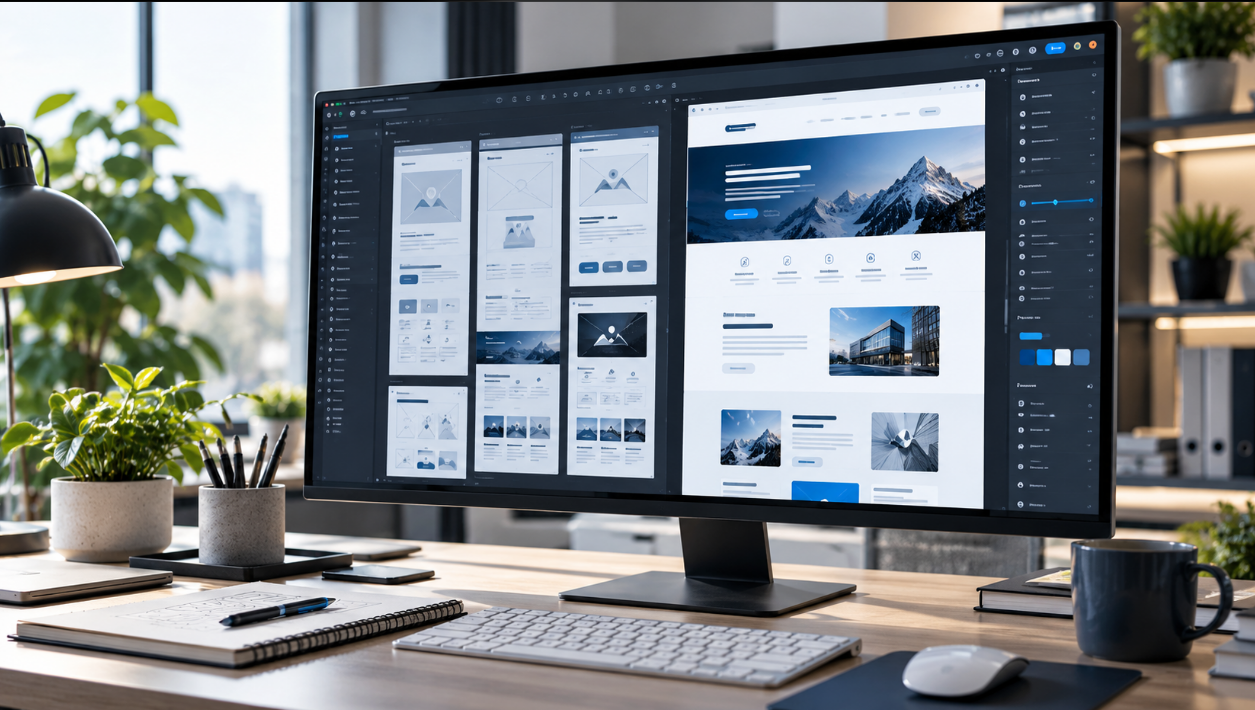
Different businesses need different websites.
A B2B company may need to communicate technical expertise, explain complex services, and generate qualified enquiries.
A professional services firm may prioritize credibility, service information, and appointment requests.
An ecommerce business needs effective product discovery, shopping functionality, and an efficient purchasing experience.
Starting with a visual template before understanding these requirements can lead to a website that looks finished but does not fully support the business.
That's why we begin by asking practical questions:
What role should the website play in your business?
Who are your customers, and what information do they need?
How should visitors discover your products or services?
Which visitor actions create meaningful business value?
What content, functionality, and integrations are required?
How might your requirements change over time?
The answers influence information architecture, user experience, design decisions, and technical implementation.
A website should be built around the job it needs to do.
Our Web Design & Development Services
1. Website Strategy and Information Architecture
Before designing interfaces, we establish how the website should be organized.
We examine your services, products, audiences, content requirements, and business objectives to define a structure that supports users and future development.
This may include:
Website structure and sitemap planning
Content hierarchy
Navigation architecture
Service and product page relationships
Key visitor journeys
Internal linking considerations
Functional requirements
The objective is to create a website where information is easy to find, relationships between pages are understandable, and future expansion can be managed without unnecessary complexity.
2. User Experience and Interface Design (UX/UI)
A website's visual design influences how people perceive a business, but usability determines how effectively they can interact with it.
Visitors should be able to understand what you offer, find relevant information, evaluate their options, and take the next step.
Our design process considers:
Visual hierarchy and content readability
Navigation and page organization
Responsive layouts
Interactive components
Forms and conversion paths
Consistent interface patterns
Brand identity and visual presentation
Depending on project requirements, page structures and user journeys may be developed through wireframes or interface designs before implementation.
We aim to create experiences that feel appropriate for your brand while remaining clear, usable, and purposeful.
3. Custom Website Design
Custom design should reflect real business requirements, not simply introduce unusual visual effects.
A business may need a distinctive interface, complex content layouts, or specialized interactions. Another may benefit more from adapting a reliable existing platform.
We evaluate design decisions in the context of brand identity, audience needs, maintainability, and future development.
The objective is to create a coherent visual system rather than a collection of disconnected pages.
This includes thinking about reusable components, consistent layouts, typography, navigation patterns, and the long-term management of the website.
4. Custom Web Development
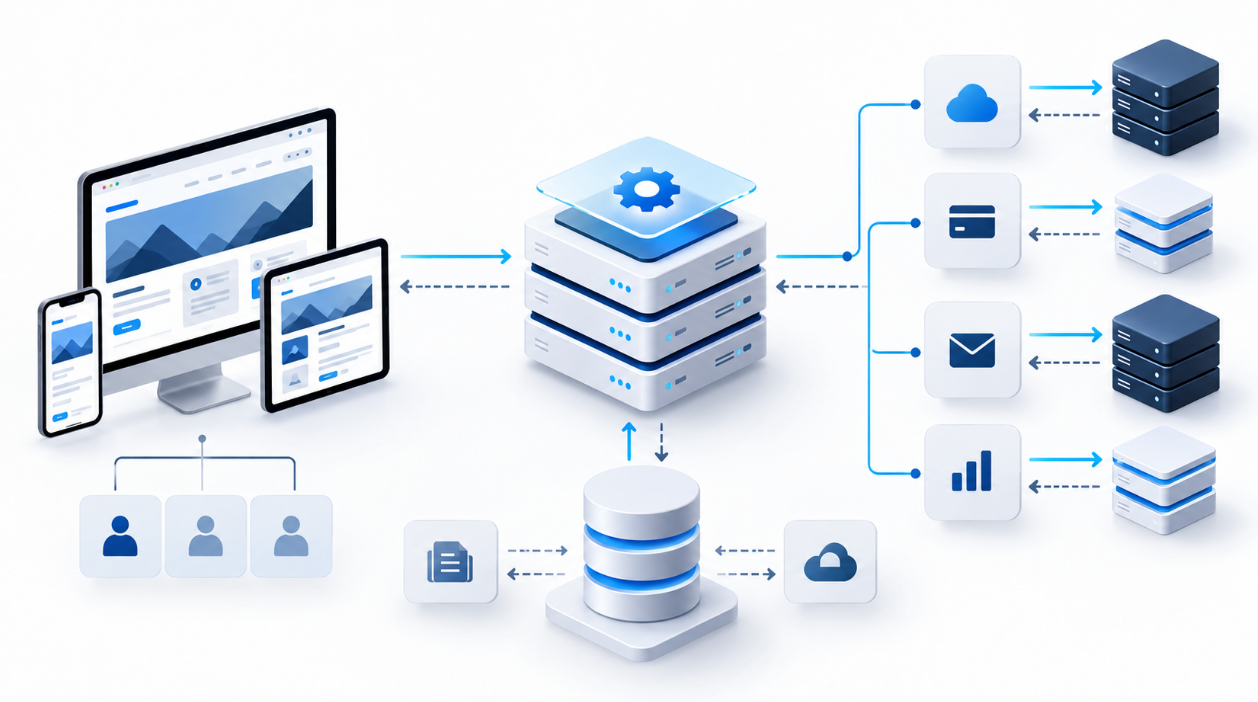
Some businesses need functionality that standard website templates or off-the-shelf tools cannot adequately provide.
Custom development can address requirements involving business workflows, specialized data structures, management interfaces, advanced forms, or connections between systems.
Depending on the project, development may involve:
Custom frontend interfaces
Backend functionality
Content management features
Business-specific modules
Database-driven content
API integrations
Custom administrative tools
Advanced workflows and user interactions
The technology and architecture should be selected according to requirements rather than preference for a particular framework.
Custom development is valuable when it solves a real operational problem, improves flexibility, or provides a justified long-term benefit.
5. Corporate and Professional Services Websites
A corporate website should communicate what the business does, who it serves, and why potential customers should consider working with it.
This often requires more than a homepage and a contact form.
Important elements may include:
Clear service architecture
Detailed service pages
Company and team information
Relevant case studies
Industry expertise
Trust and credibility signals
Lead generation forms
Contact and enquiry journeys
For professional services and B2B businesses, the website often supports a longer decision-making process.
We organize content and interactions to help visitors understand complex offerings and move toward a relevant business conversation.
6. Ecommerce Website Design and Development
An ecommerce website needs to support both the customer experience and the operational requirements of selling online.
Customers should be able to discover products, understand differences between options, review purchasing conditions, and complete transactions.
The business also needs suitable tools for managing products, orders, and relevant workflows.
Depending on requirements, development may include:
Product and category architecture
Product detail page layouts
Filtering and navigation
Shopping cart functionality
Checkout experiences
Ecommerce content management
Platform-specific customization
Relevant business integrations
Launching the store establishes the foundation.
Further improvements to customer acquisition, product discovery, conversion, and revenue performance can form part of an ongoing ecommerce growth strategy.
7. Responsive Web Design and Mobile Experience
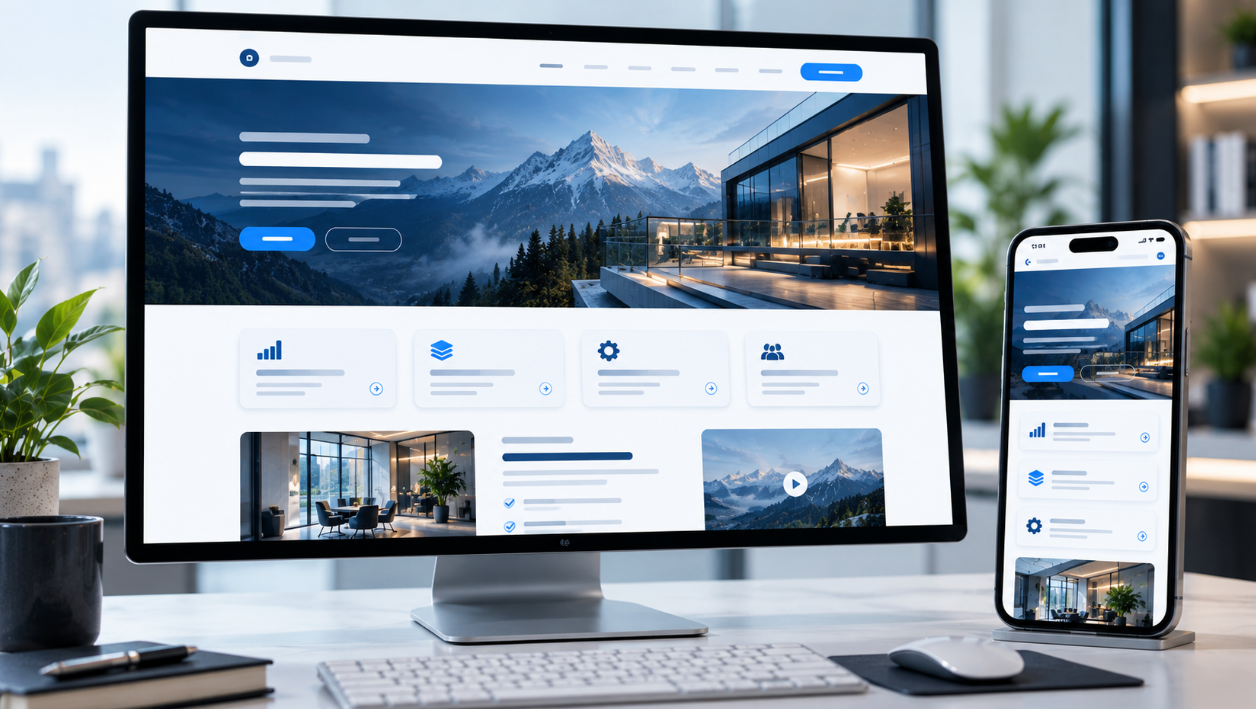
Responsive design should deliver a usable experience across different screen sizes and devices.
It is more than shrinking desktop layouts to fit smaller screens.
Navigation, information hierarchy, touch targets, forms, images, and interactive features all require consideration.
We pay attention to whether essential content and functionality remain accessible on mobile devices.
Important information should not disappear simply to make a page look less crowded.
A responsive experience should preserve the purpose of the website while adapting its presentation to the device being used.
8. SEO-Friendly Website Architecture
Search considerations are easier to address when they are included in website planning and development rather than treated entirely as post-launch tasks.
We consider the technical foundations that help search engines access and understand content.
Relevant areas may include:
Crawlable website navigation
Logical URL architecture
Semantic HTML structure
Page titles and metadata management
Internal linking
Content rendering
XML sitemaps
Appropriate indexing controls
Structured data where relevant
Technical readiness does not guarantee search rankings.
It helps establish a suitable foundation for ongoing SEO strategy, content development, and performance improvement.
9. Website Performance and Accessibility
Website quality includes how quickly pages load, how responsive they feel, and how reliably people can interact with them.
Performance requirements may involve image optimization, CSS and JavaScript management, caching, server responses, and efficient loading behavior.
We also consider accessibility principles such as:
Readable text and sufficient contrast
Logical heading structure
Keyboard accessibility
Form labels and helpful error messages
Accessible navigation patterns
Appropriate alternative text for informative images
Core Web Vitals and standards such as WCAG provide useful frameworks for evaluating these areas.
The objective is to improve real user experiences and address verified issues, not promise perfect results in every automated testing tool.
10. Website Integrations and Business Workflows
For some businesses, the website needs to communicate with other systems.
Customer enquiries might be routed to a CRM. Ecommerce operations may depend on inventory or order management software. Analytics systems may require custom event tracking.
Where appropriate, we assess potential integrations through APIs or other supported methods.
Planning needs to account for technical feasibility, permissions, data quality, security, and future maintenance.
Not every integration requires custom development, and not every available integration provides enough value to justify implementation.
11. Website Redesign and Modernization
An existing website does not always need to be replaced.
Sometimes the underlying platform is reliable, but the design and user experience need improvement.
In other situations, outdated architecture, technical debt, or limited functionality may make ongoing development unnecessarily difficult.
We evaluate the condition of the current website before recommending the scope of modernization.
Potential improvements may involve:
Visual redesign
Information architecture revisions
UX improvements
Performance optimization
Technical modernization
Content structure changes
Functionality upgrades
Platform migration when justified
When URLs, page structures, or platforms change, the project should also consider migration risks, redirects, and continuity of access to existing content.
12. Ongoing Website Development and Optimization
A website launch marks the beginning of real-world use, not the end of improvement.
Once visitors begin interacting with the platform, new information becomes available.
Some pages may need clearer content. Forms may require refinement. Users may encounter unexpected obstacles. Business requirements may change.
Our long-term partnership approach supports continued development, technical maintenance, performance analysis, and improvements aligned with business priorities.
Rather than treating the website as a static deliverable, we see it as an evolving digital platform.
Choosing the Right Technology for Your Website
There is no single technology that is right for every business.
A content management system may provide a practical foundation for a marketing website. A complex business application may require more specialized architecture.
Some projects benefit from extending an existing system, while others justify custom development.
The decision should consider:
| Consideration | Established CMS | Custom Development |
|---|---|---|
| Initial implementation | May be faster for common requirements | Depends on functionality and architecture |
| Content management | Often available out of the box | Must be selected or developed |
| Custom functionality | Depends on extension capabilities | Can be designed for specific requirements |
| Maintenance | Depends on core software, extensions, and configuration | Depends on code quality and architecture |
| Future flexibility | Limited by the platform and implementation | Dependent on architectural decisions |
| Total cost | Influenced by customization and ongoing maintenance | Influenced by development and long-term ownership |
The objective is not to advocate for custom code in every situation.
It is to choose an approach that balances functionality, flexibility, maintainability, security, and total cost of ownership.
Our Web Design & Development Process
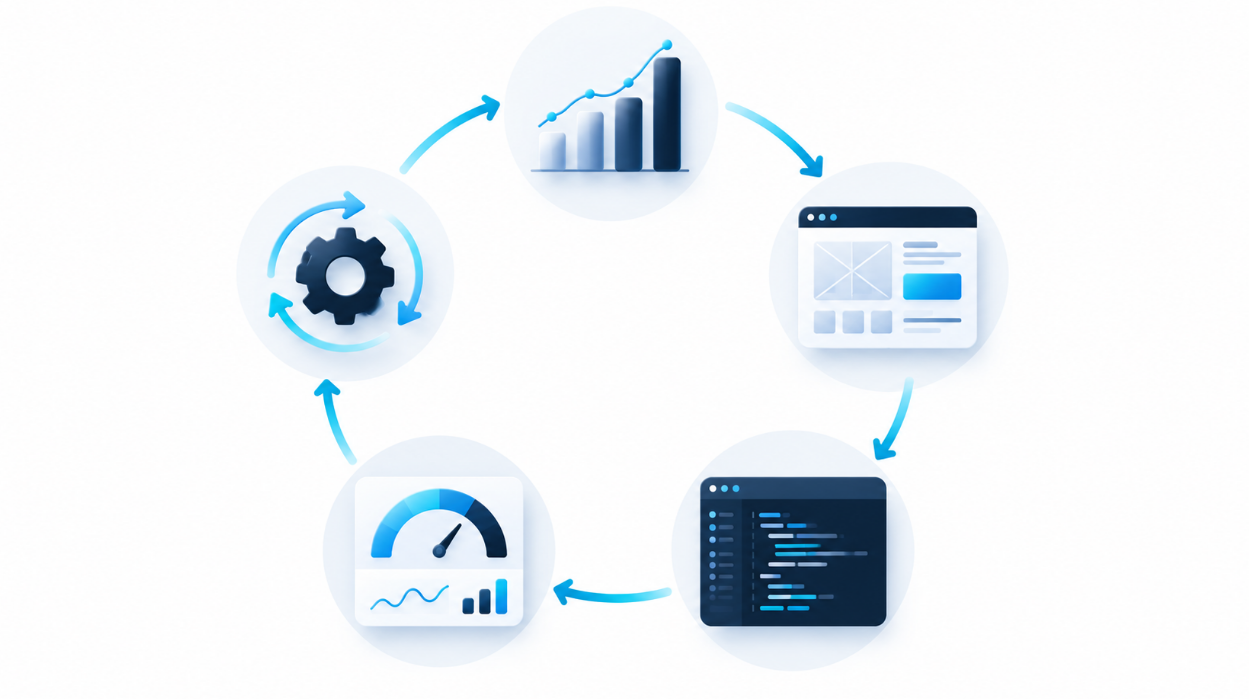
Step 1: Discovery and Business Requirements
We begin by understanding your business, users, objectives, existing technology, operational needs, and project constraints.
This helps establish what the website must accomplish.
Step 2: Architecture and Planning
We define the proposed site structure, content organization, key user journeys, functional requirements, and technical considerations.
Planning helps reduce ambiguity before development begins.
Step 3: UX and Interface Design
We develop appropriate page structures and interface designs based on the agreed requirements.
The design process considers usability, branding, responsiveness, and the intended visitor actions.
Step 4: Development and Integration
We implement the required frontend and backend features, content management capabilities, and integrations according to the project's scope.
Technical decisions are made with future maintainability in mind.
Step 5: Testing and Launch
Before launch, the agreed functionality and key user journeys are tested.
Depending on project requirements, testing may cover responsive layouts, forms, navigation, browser behavior, technical SEO foundations, and performance issues.
Identified problems are addressed before release where feasible, and remaining limitations should be documented.
Step 6: Continuous Improvement
Following launch, the website can be monitored and refined based on available analytics, user behavior, technical findings, and evolving business needs.
This supports a more sustainable approach to digital growth.
What Makes Karnaweb's Approach Different?
Web Development and SEO Experience Together
Website architecture affects both users and search engines.
Combining development and SEO experience helps us consider these requirements together rather than separating them into disconnected projects.
Business Needs Guide Technical Decisions
We don't assume that the most complex technology or the most elaborate design is the right solution.
Recommendations should address actual business requirements and practical constraints.
Long-Term Thinking From the Beginning
A website should be designed with future changes in mind.
Content management, maintainability, extensibility, and technical structure matter beyond the initial launch.
A Connected View of Digital Performance
Design, content, performance, organic visibility, and conversion are closely related.
We consider how decisions across these areas affect the overall website experience and business outcomes.
How Do We Measure Website Success?
The right performance indicators depend on the role the website plays in your business.
| Area | What We Evaluate |
|---|---|
| Conversion Performance | Meaningful visitor actions such as enquiries, bookings, or purchases |
| Lead Generation | Quality and relevance of website enquiries |
| Technical Performance | Loading speed, responsiveness, and visual stability |
| Accessibility | Usability for visitors with different needs |
| Organic Discoverability | Technical accessibility and visibility of important content |
| Maintainability | Ability to update, fix, and extend the platform |
| Business Outcomes | Relevant leads, sales, or other measurable commercial results |
Not every metric can be directly attributed to website design alone.
We aim to establish appropriate measurement methods and interpret performance in the context of the wider business.
Who Are Our Web Design & Development Services For?
Our approach is particularly suitable for:
B2B companies seeking a stronger digital presence and lead generation platform
Professional service providers with complex offerings
Established businesses with outdated or underperforming websites
Ecommerce businesses requiring customized functionality
Companies that need integrations with operational systems
Organizations looking for a long-term development and digital growth partner
Frequently Asked Questions
What is the difference between custom web design and a template-based website?
Custom web design is shaped around specific requirements, while template-based websites begin with an existing design structure.
A template can reduce initial effort, but its flexibility depends on the platform and implementation.
The right option depends on the business's needs, budget, and future plans.
Is custom development always better?
No.
Custom development is appropriate when the benefits justify the additional complexity and cost.
An established CMS or existing platform can be the better choice when it meets the requirements effectively.
Will my website be built with SEO in mind?
Our development approach considers technical SEO foundations such as crawlable navigation, information architecture, appropriate metadata management, and accessible content.
Achieving ongoing organic growth requires additional SEO and content work beyond technical implementation.
Can you work with WordPress and custom-built websites?
Karnaweb's experience covers custom web development and WordPress-based projects.
The proposed implementation approach depends on your requirements, existing technology, and the project's technical constraints.
Can the website integrate with our CRM or other business software?
Potential integrations can be assessed when appropriate APIs, technical access, and supported methods are available.
Feasibility, security, scope, and maintenance responsibilities need to be established before implementation.
Do we need to rebuild our existing website?
Not necessarily.
A targeted redesign, technical improvement, or structural update may be sufficient.
We evaluate the condition of the existing platform before recommending replacement.
How long does it take to build a website?
Project duration depends on content readiness, design complexity, the number of templates and pages, custom functionality, integrations, and review requirements.
A reliable timeline can be established after the scope is defined.
How much does custom web design and development cost?
Costs vary according to design requirements, functionality, technical complexity, integrations, content needs, and ongoing support arrangements.
We recommend defining the project around clear requirements rather than assuming a fixed package is suitable for every business.
Do you provide support and ongoing development after launch?
Our partnership model supports continued website development and optimization.
Maintenance, support, and improvement responsibilities are determined by the agreed engagement.
Build a Website That Can Grow With Your Business
Your website should support more than today's requirements.
It should help customers understand your business, make it easier to take meaningful action, and provide a foundation for future improvements.
At Karnaweb, we connect web design, custom development, SEO, and performance thinking to create digital platforms built around business needs.
Launching your website is not the end of the project. It's the beginning of growth.
Final CTA: Let's Build Your Next Stage of Digital Growth